Peromyscus
| Genus Peromyscus | |
|---|---|
| Taxonomic classification | |
| Order: | Rodentia |
| Suborder: | Supramyomorpha |
| Infraorder: | Myomorphi |
| Superfamily: | Muroidea |
| Family: | Cricetidae |
| Subfamily: | Neotominae |
| Tribe: | Peromyscini |
From Bedford & Hoekstra (2015): "The deer mouse (genus Peromyscus) is the most abundant mammal in North America, and it occupies almost every type of terrestrial habitat. It is not surprising therefore that the natural history of Peromyscus is among the best studied of any small mammal. For decades, the deer mouse has contributed to our understanding of population genetics, disease ecology, longevity, endocrinology and behavior. Over a century's worth of detailed descriptive studies of Peromyscus in the wild, coupled with emerging genetic and genomic techniques, have now positioned these mice as model organisms for the study of natural variation and adaptation. Recent work, combining field observations and laboratory experiments, has lead to exciting advances in a number of fields-from evolution and genetics, to physiology and neurobiology."
Recently, several molecular studies have provided insight into the systematic status of some of the species within Peromyscus. Molecular studies by Bradley et al. (2019) and Greenbaum et. al (2019) indicate that Peromyscus maniculatus is a complex of multiple species. Both studies elevate some lineages within maniculatus to species status, including Peromyscus labecula, Peromyscus sonoriensis, and Peromyscus gambelli. However, molecular analyses by Boria & Blois (2023) show Peromyscus maniculatus gambelii and Peromyscus maniculatus sonoriensis are either very recently diverged or in the process of diversification and they recommend that they should not yet be raised to distinct species. Analysis of whole genome sequences by Boria et al.'s (2026, preprint) found: "all population genetic and phylogenetic analyses indicate P. m. gambelli is nested within P. m. sonoriensis, corroborating recent findings (Boria and Blois 2023)." As a result, P. gambelli may be subsumed under P. sonoriensis in future releases of the American Society of Mammalogists' Mammal Diversity Database and the range of this species may include all of California.The taxonomy of the Peromyscus maniculatus species group may further change in the near future as additional studies are published.
Species in the United States
The genus Peromyscus contains species that are often extremely difficult to differentiate unless careful measurements are taken or genetic testing is conducted. Coloration is not always a reliable character as it can be quite variable, but also quite similar across species. Differentiating between P. maniculatus (sensu lato, which includes P. maniculatus, P. sonoriensis, P. gambelii, P. labecula, and P. melanotis) and P. leucopus using external characters is notoriously difficult in certain parts of the country and genetic testing may be required in order to be certain. While most of the Peromyscus look similar at first glance, P. truei has significantly larger ears (in most of its range) and P. keeni have very long tails. Peromyscus polionotus is a relatively small member of this genus. Species not pictured: California Deermouse (Peromyscus californicus), Saxicoline Deermouse (Peromyscus gratus), Southern Deermouse (Peromyscus labecula), Northern White-ankled Deermouse (Peromyscus laceianus), Merriam's Deermouse (Peromyscus merriami).
-

Texas Deermouse (Peromyscus attwateri) -

Brush Deermouse (Peromyscus boylii) -

Canyon Deermouse (Peromyscus crinitus) -

Cactus Deermouse (Peromyscus eremicus) -

Northern Baja Deermouse (Peromyscus fraterculus) -

Gambel's Deermouse (Peromyscus gambelii) -

Cotton Deermouse (Peromyscus gossypinus) -

Northwestern Deermouse (Peromyscus keeni) -

White-footed Deermouse (Peromyscus leucopus) -

Eastern Deermouse (Peromyscus maniculatus) -

Black-eared Deermouse (Peromyscus melanotis) -

Northern Rock Deermouse (Peromyscus nasutus) -

Oldfield Deermouse (Peromyscus polionotus) -

Western Deermouse (Peromyscus sonoriensis) -

Western Deermouse (Peromyscus sonoriensis), long-tailed population in Washington -

Pinyon Deermouse (Peromyscus truei)
Available taxon pages
The following species are available on WhiskerWiki for this genus:
- Peromyscus labecula
- Peromyscus melanotis
- Peromyscus truei
- Peromyscus sonoriensis
- Peromyscus polionotus
- Peromyscus nasutus
- Peromyscus merriami
- Peromyscus maniculatus
- Peromyscus leucopus
- Peromyscus laceianus
- Peromyscus attwateri
- Peromyscus keeni
- Peromyscus gratus
- Peromyscus gossypinus
- Peromyscus gambelii
- Peromyscus fraterculus
- Peromyscus eremicus
- Peromyscus crinitus
- Peromyscus californicus
- Peromyscus boylii
Range maps for species in the United States
-

Texas Deermouse (Peromyscus attwateri) -

Brush Deermouse (Peromyscus boylii) -
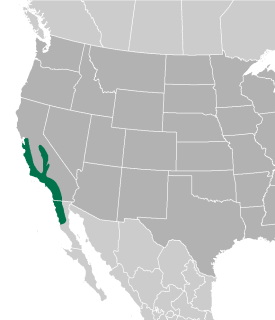
California Deermouse (Peromyscus californicus) -
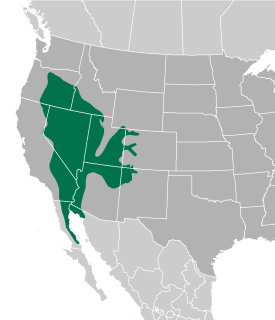
Canyon Deermouse (Peromyscus crinitus) -
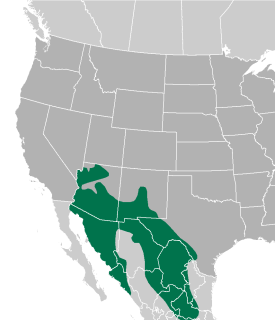
Cactus Deermouse (Peromyscus eremicus) -

Northern Baja Deermouse (Peromyscus fraterculus) -
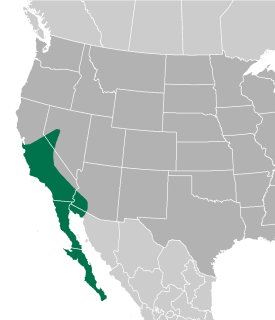
Gambel's Deermouse (Peromyscus gambelii). Split from P. maniculatus by Greenbaum et al. (2019) and Bradley et al. (2019). -
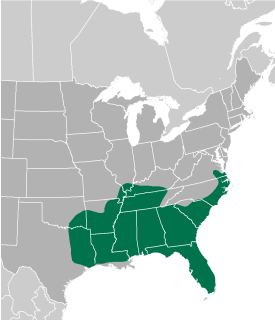
Cotton Deermouse (Peromyscus gossypinus) -

Saxicoline Deermouse (Peromyscus gratus) -

Northwestern Deermouse (Peromyscus keeni) -

Southern Deermouse (Peromyscus labecula). Split from P. maniculatus by Greenbaum et al. (2019) and Bradley et al. (2019). -

Northern White-ankled Deermouse (Peromyscus laceianus) Split from P. pectoralis by Bradley et al. (2015). -

White-footed Deermouse (Peromyscus leucopus) -

Eastern Deermouse (Peromyscus maniculatus). Range based on molecular analyses published by Greenbaum et al. (2019) and Bradley et al. (2019). -
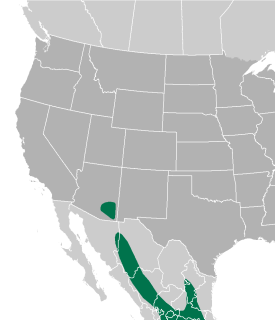
Black-eared Deermouse (Peromyscus melanotis) -
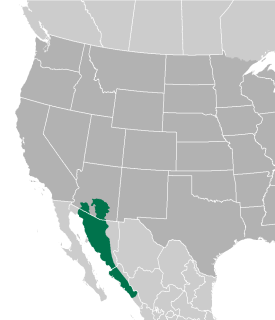
Merriam's Deermouse (Peromyscus merriami) -

Northern Rock Deermouse (Peromyscus nasutus) -

Oldfield Deermouse (Peromyscus polionotus) -
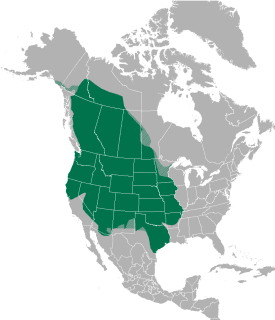
Western Deermouse (Peromyscus sonoriensis). Split from P. maniculatus by Greenbaum et al. (2019) and Bradley et al. (2019). -
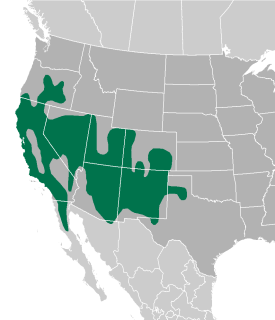
Pinyon Deermouse (Peromyscus truei)
References
Bedford NL, Hoekstra HE. 2015. Peromyscus mice as a model for studying natural variation. elife 4: p.e06813. DOI: 10.7554/eLife.06813.001
Boria RA, Blois JL. 2023. Phylogeography within the Peromyscus maniculatus species group: Understanding past distribution of genetic diversity and areas of refugia in western North America. Molecular Phylogenetics and Evolution 180: 107701.
Bradley RD, Francis JQ, Platt II RN, Soniat TJ, Alvarez D, Lindsey LL. 2019, Mitochondrial DNA Sequence Data Indicate Evidence For Multiple Species Within Peromyscus maniculatus, pp. 1-59 in Special Publications of the Museum of Texas Tech University 70 on pages 16-18, DOI: 10.5281/zenodo.7221903
Greenbaum IF, Honeycutt RL, Chirhart SE. 2019. Taxonomy and phylogenetics of the Peromyscus maniculatus species group. From field to laboratory: a memorial volume in honor to Robert J. Baker 71: 559-575.