Dipodomys heermanni
| Heermann's Kangaroo Rat
(Dipodomys heermanni) | |
|---|---|
| Range | |
 | |
| Taxonomic classification | |
| Order: | Rodentia |
| Suborder: | Supramyomorpha |
| Infraorder: | Castorimorphi |
| Superfamily: | Geomyoidea |
| Family: | Heteromyidae |
| Subfamily: | Dipodomyinae |
| Genus: | Dipodomys |
| Binomial details | |
| Dipodomys heermanni LeConte, 1853 | |
| Other resources | |
| Full taxonomic details at MDD | |
Description
From Kelt (1988): "The pelage in D. heermanni is long and silky. The general color pattern is typical of that for Dipodomys in general (Hall, 1981). The dorsal body surface in this species ranges in color from tawny-olive strongly overwashed with black (D. h. morroensis), to ochraceous-buff (D. h. swarthi; Grinnell, 1922), although albino specimens are known (von Bloeker, 1930). The characteristic hip stripe that separates the darker thighs and dorsum in most Dipodomys is absent in roughly 5% of D. h. arenae and over 75% of D. h. morroensis (A. I. Roest, in litt.). The tail crest ranges from black with a sharply demarcated white tip in some D. h. heermanni (these may be D. californicus), to dusky and only slightly crested in D. h. dixoni, D. h. berkeleyensis, and most D. h. heermanni, to dusky or blackish and very scantily haired in D. h. goldmani and D. h. morroensis (Grinnell, 1922). The dorsal guard hairs are oval and taper abruptly; they are unbanded and possess well-developed medullary aggregations located in individual invaginations in the medullary substance (Homan and Genoways, 1978; Mayer, 1952). These hairs are usually 13 mm or less in length (if 13 mm, then medullary aggregations are not more than three abreast); cortical pigmentation is prominent for < 4 mm along the length of the shaft. In D. h. goldmani the dorsal guard hairs have a maximum length of 15 mm, width to 45 μm, and medullary (not cortical) pigmentation is dark for the distal fraction of a mm, and this is subtended by a 2 mm black band (Mayer, 1952)."
From Jameson & Peeters (2004): "A medium to large, dark kangaroo rat. The hind foot has five toes."


External measurements
Length measurements are in millimeters (mm) and weight measurements are in grams (g), unless stated otherwise. If available, the sample size (n=) is provided. If a range is not provided and n= is not given, then the listed measurement represents an average.
| Part of range | Reference | Total length | Tail length | Hindfoot length | Ear length | Mass |
|---|---|---|---|---|---|---|
| California | Grinnell (1922) | 250–313 | 160–200 | 38–46 | 10–17 | |
| California | Jameson & Peeters (2004) | 250–340 | 160–200 | 38–47 | 56–74 |
Skull
From Jameson & Peeters (2004): "The upper rear margin of the zygomatic arch is straight and sharply set off from a distinctly lower concavity."
The holotype for the species (ANSP 229) is located in the Academy of Natural Sciences of Drexel University located in Philadelphia, Pennsylvania. Images are not currently available, so images for the holotype of the subspecies tularensis is shown below.
-

Holotype: USNM 127158. Dipodomys heermanni tularensis. Adult female. Tulare County, California. Collected 23 June 1903. Dorsal view of the skull. -

Holotype: USNM 127158. Dipodomys heermanni tularensis. Adult female. Tulare County, California. Collected 23 June 1903. Ventral view of the skull. -

Holotype: USNM 127158. Dipodomys heermanni tularensis. Adult female. Tulare County, California. Collected 23 June 1903. Lateral view of the skull. -

Holotype: USNM 127158. Dipodomys heermanni tularensis. Adult female. Tulare County, California. Collected 23 June 1903. Dorsal view of the mandible. -

Holotype: USNM 127158. Dipodomys heermanni tularensis. Adult female. Tulare County, California. Collected 23 June 1903. Lateral view of the left mandible.


Similar species
From Kelt (1988): "Heermann's kangaroo rat possesses five toes on each hind foot. This feature alone distinguishes the species from the similar D. californicus where their ranges meet in central California, and from the smaller D. nitratoides where they co-occur in southwestern California. D. ingens is largest and heaviest of the kangaroo rats, and may be distinguished from D. heermanni primarily on the basis of size (Grinnell, 1922; Hall, 1981). All remaining sympatric species of kangaroo rats are in Lidicker's (1960) agilis-subgroup of the heermanni group, and are most readily characterized as being "narrow-faced" (Grinnell, 1922). Additionally, D. agilis generally is darker than subspecies of D. heermanni with which it is sympatric. Both D. venustus and D. elephantinus [taxonomic update: Dipodomys elephantinus was once considered a distinct species, but is now considered a subspecies of Dipodomys venustus] may be distinguished by their large ears and larger size than co-occurring D. heermanni (Grinnell, 1922)."
Grinnell (1922) describes broad-faced as "the two maxillary arches are wide, they spread apart from the axis of the skull broadly, and the postero-external angle of each is prominent." Narrow-faced is described as "the maxillary arches are narrow, less widely spreading, and the postero-external angles are weakly developed."
-

Illustration from Grinnell (1922) comparing broad-faced and narrow-faced types. Skulls 1 and 4 are narrow-faced species, Agile Kangaroo Rat (Dipodomys agilis) and Chisel-toothed Kangaroo Rat (Dipodomys microps), respectively. Skull 2 and 3 are broad-faced species, Heermann's Kangaroo Rat (Dipodomys heermanni) and Stephens's Kangaroo Rat (Dipodomys stephensi), respectively. -

Agile Kangaroo Rat (Dipodomys agilis) -
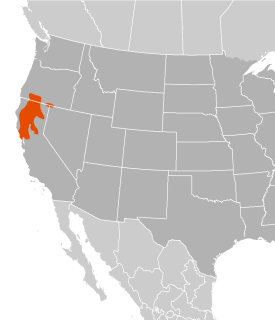
California Kangaroo Rat (Dipodomys californicus) -
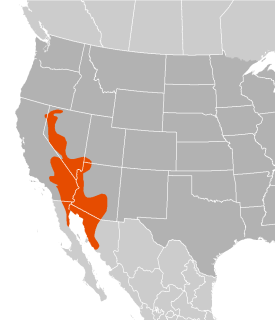
Desert Kangaroo Rat (Dipodomys deserti) -

Heermann's Kangaroo Rat (Dipodomys heermanni) -

Giant Kangaroo Rat (Dipodomys ingens) -

Merriam's Kangaroo Rat (Dipodomys merriami) -

Chisel-toothed Kangaroo Rat (Dipodomys microps) -

San Joaquin Kangaroo Rat (Dipodomys nitratoides) -
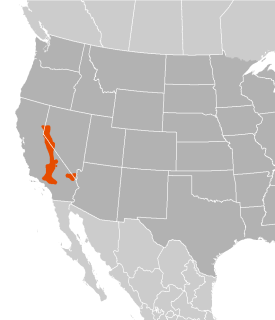
Panamint Kangaroo Rat (Dipodomys panamintinus) -
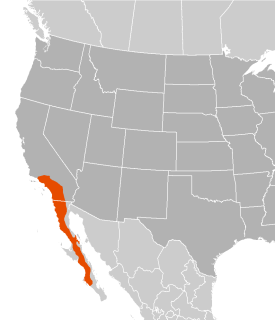
Dulzura Kangaroo Rat (Dipodomys simulans) -

Narrow-faced Kangaroo Rat (Dipodomys venustus) (+D. venustus elephantinus)

References
Grinnell J. 1922. A geographical study of the kangaroo rats of California. University of California Publications in Zoology 24: 1-124. File:Grinnell 1922 California kangaroo rats.pdf
Hall ER. 1981. The mammals of North America. 2 vols. John Wiley and Sons, New York.
Jameson EW, Peeters HJ. 2004. Mammals of California (No. 66). Berkeley (CA, USA): University of California Press.
Kelt DA. 1988. Dipodomys heermanni. Mammalian Species (323): 1-7. https://doi.org/10.2307/3504171
Le Conte J. 1853. Remarks on the genus Dipodomys. Proceedings of the Academy of Natural Sciences of Philadelphia, 6, 224.
Lidicker Jr. WZ. 1960. An analysis of intraspecific variation in the kangaroo rat Dipodomys merriami. University of California Publications in Zoology 67:125-217.