Megascapheus baileyi
| Southwestern Texas Pocket Gopher
(Megascapheus baileyi) | |
|---|---|
| Range | |
 | |
| Taxonomic classification | |
| Order: | Rodentia |
| Suborder: | Supramyomorpha |
| Infraorder: | Castorimorphi |
| Superfamily: | Geomyoidea |
| Family: | Geomyidae |
| Subfamily: | Geomyinae |
| Tribe: | Thomomyini |
| Genus: | Megascapheus |
| Binomial details | |
| Megascapheus baileyi (C. H. Merriam, 1901) | |
| Other resources | |
| Full taxonomic details at MDD | |
The Southwestern Texas Pocket Gopher (Megascapheus baileyi) is a pocket gopher mainly found in grasslands and grassy shrublands. Friable soils are important as this species is fossorial and rarely leaves its network of underground burrows. It can be difficult to distinguish from other pocket gophers. Individuals found above ground are often dispersing individuals.

Description
The Southwestern Texas Pocket Gopher (Megascapheus baileyi) contains many subspecies that range in color from buffy-yellow to pinkish-buff to cinnamon to dark gray.


Subspecies
-
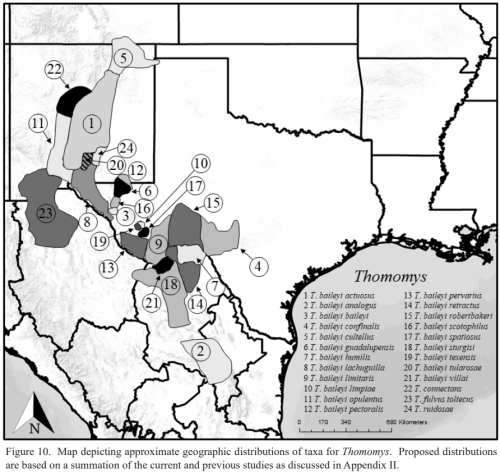
Borrowed from Bradley et al. (2023): Map depicting approximate geographic distributions of taxa for Thomomys (now Megacapheus; Álvarez-Castañeda and Segura-Trujillo, 2025). The distributions proposed here by Bradley et al. (2023) are based on DNA sequence data obtained from the mitochondrial cytochrome-b gene, as well as previous morphometric, allozymic, karyotypic, and DNA studies.

Museum specimens
subspecies actuosus
From Bradley et al. (2023) for subspecies actuosus: "actuosus is larger than texensis but smaller than tularosae."
-
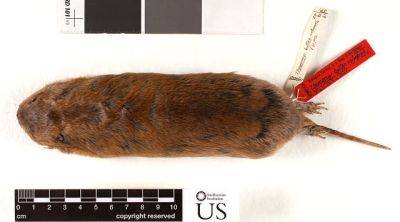
Holotype: 119053. Megascapheus baileyi actuosus. Adult male. Corona, Lincoln County, New Mexico. Collected 13 October 1902. -
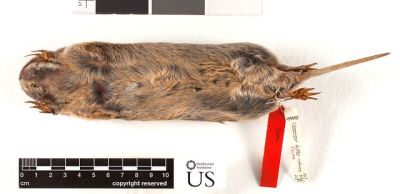
Holotype: 119053. Megascapheus baileyi actuosus. Adult male. Corona, Lincoln County, New Mexico. Collected 13 October 1902.


subspecies analogus
From Bradley et al. (2023) for subspecies analogus: "This subspecies is pinkish buff in coloration and slightly darker than perditus. It has broad and distinctive nasals and a skull similar in size to potosinus. The skull is more elongated and broader, with less rounded and inflated auditory bullae comparted to perditus. The nasals are broader; the auditory bullae are larger and less flattened, and the incisors are broader than in goldmani."
subspecies baileyi
From Bradley et al. (2023) for subspecies baileyi: "baileyi is similar to lachuguilla but has a shorter and wider skull, and a dull ochraceous tawny to cinnamon coloration."
-

Holotype: 18256/25159. Megascapheus baileyi baileyi. Adult female. On plain east of Sierra Blanca, Hudspeth County, Texas. Collected 28 December 1889. -
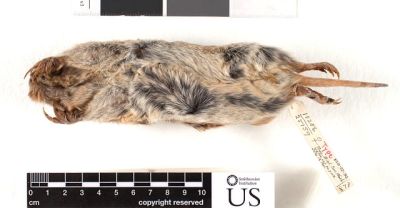
Holotype: 18256/25159. Megascapheus baileyi baileyi. Adult female. On plain east of Sierra Blanca, Hudspeth County, Texas. Collected 28 December 1889.


subspecies confinalis
-

Dorsal view of Megascapheus baileyi supspecies confinalis collected in 1902 in Kerr County, Texas. -
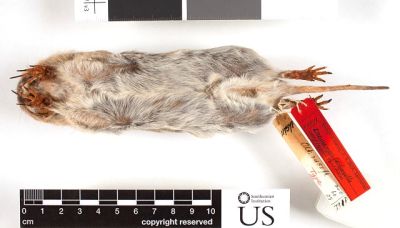
Dorsal view of Megascapheus baileyi supspecies confinalis collected in 1902 in Kerr County, Texas.


subspecies cultellus
-
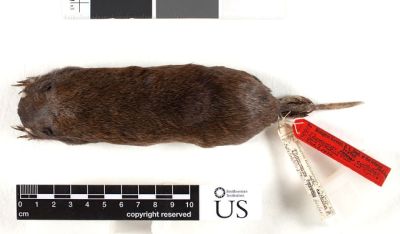
Dorsal view of Megascapheus baileyi supspecies cultellus collected in 1895 in Mora County, New Mexico. -

Ventral view of Megascapheus baileyi supspecies cultellus collected in 1895 in Mora County, New Mexico.


subspecies guadalupensis
-
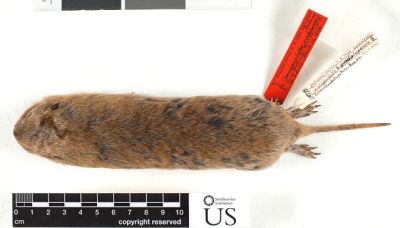
Dorsal view of Megascapheus baileyi supspecies guadalupensis collected in 1901 Culberson County, Texas. -

Ventral view of Megascapheus baileyi supspecies guadalupensis collected in 1901 Culberson County, Texas.


subspecies lachuguilla
From Bradley et al. (2023) for subspecies lachuguilla: "lachuguilla is smaller, buffy-yellow in coloration, with larger auditory bullae, a narrower basioccipital, and two pair of pectoral mammae."
-
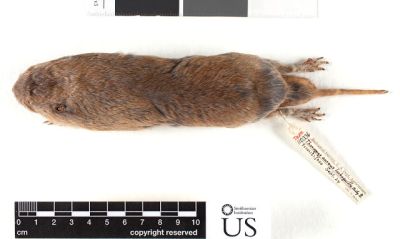
Dorsal view of Megascapheus baileyi supspecies lachuguilla collected in 1901 in El Paso County, Texas. -

Ventral view of Megascapheus baileyi supspecies lachuguilla collected in 1901 in El Paso County, Texas.


subspecies limitaris
-

Dorsal view of Megascapheus baileyi supspecies limitaris collected in 1901 in Brewster County, Texas. -

Ventral view of Megascapheus baileyi supspecies limitaris collected in 1901 in Brewster County, Texas.


subspecies opulentus
-
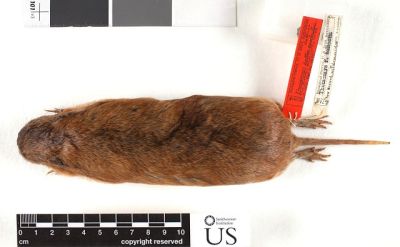
Dorsal view of Megascapheus baileyi supspecies opulentus collected in 1909 in Sierra County, New Mexico. -
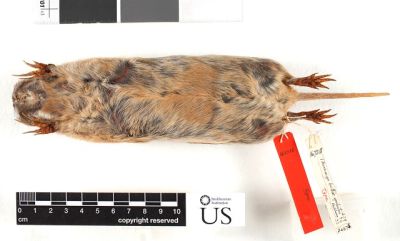
Ventral view of Megascapheus baileyi supspecies opulentus collected in 1909 in Sierra County, New Mexico.


subspecies pectoralis
-
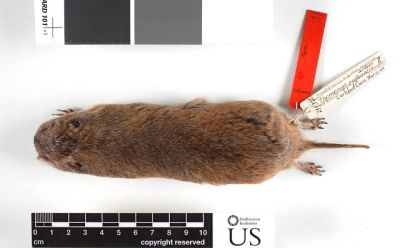
Dorsal view of Megascapheus baileyi supspecies pectoralis collected in 1924 in Eddy County, New Mexico. -
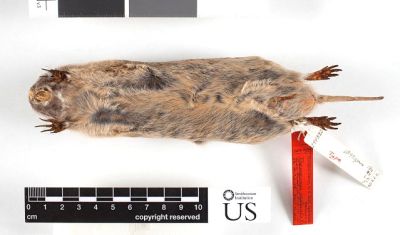
Ventral view of Megascapheus baileyi supspecies pectoralis collected in 1924 in Eddy County, New Mexico.


subspecies pervarius
-
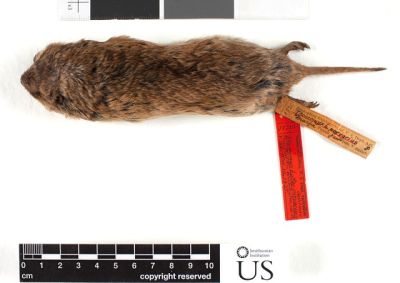
Dorsal view of Megascapheus baileyi supspecies pervarius collected in 1890 in Presidio County, Texas. -
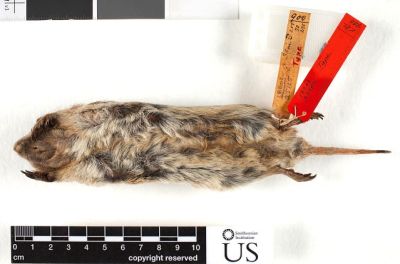
Ventral view of Megascapheus baileyi supspecies pervarius collected in 1890 in Presidio County, Texas.


subspecies spatiosus
From Bradley et al. (2023) for subspecies spatiosus: "spatiosus is generally darker with a broader, heavier, and longer rostrum compared to other subspecies of T. baileyi."
-

Dorsal view of Megascapheus baileyi supspecies spatiosus collected in 1900 in Brewster County, Texas. -
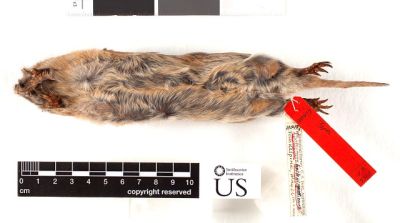
Ventral view of Megascapheus baileyi supspecies spatiosus collected in 1900 in Brewster County, Texas.


subspecies texensis
-
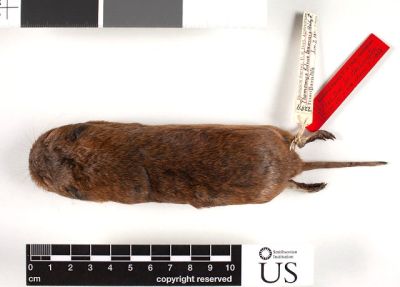
Dorsal view of Megascapheus baileyi supspecies texensis collected in 1890 in Jeff Davis County, Texas. -
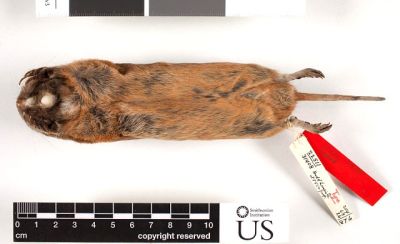
Ventral view of Megascapheus baileyi supspecies texensis collected in 1890 in Jeff Davis County, Texas.


subspecies tularosae
From Bradley et al. (2023) for subspecies tularosae: "tularosae is larger size and has a more robust skull than other subspecies of T. baileyi.
-

Holotype: 18256/25159. Megascapheus baileyi baileyi. Adult female. On plain east of Sierra Blanca, Hudspeth County, Texas. Collected 28 December 1889. Dorsal view of the skull. -

Holotype: 18256/25159. Megascapheus baileyi baileyi. Adult female. On plain east of Sierra Blanca, Hudspeth County, Texas. Collected 28 December 1889. Lateral view of the skull. -
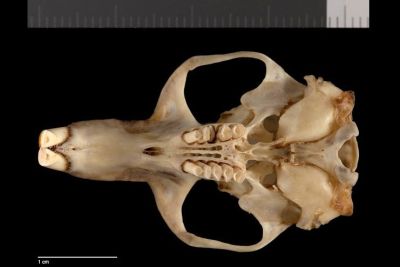
Holotype: 18256/25159. Megascapheus baileyi baileyi. Adult female. On plain east of Sierra Blanca, Hudspeth County, Texas. Collected 28 December 1889. Ventral view of the skull. -
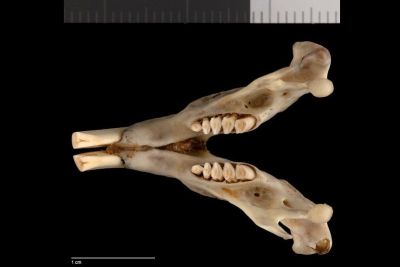
Holotype: 18256/25159. Megascapheus baileyi baileyi. Adult female. On plain east of Sierra Blanca, Hudspeth County, Texas. Collected 28 December 1889. Dorsal view of the mandible. -
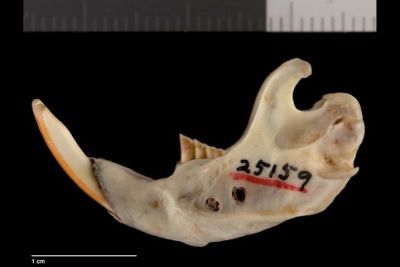
Holotype: 18256/25159. Megascapheus baileyi baileyi. Adult female. On plain east of Sierra Blanca, Hudspeth County, Texas. Collected 28 December 1889. Lateral view of the left mandible. -
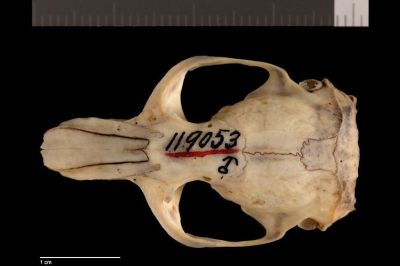
Dorsal view of the skull of Thomomys bottae actuosus, which was subsumed under baileyi by Bradley et al. (2023). Skull was collected in 1902 in Lincoln County, New Mexico.
External measurements
Length measurements are in millimeters (mm) and weight measurements are in grams (g), unless stated otherwise. If available, the sample size (n=) is provided. If a range is not provided and n= is not given, then the listed measurement represents an average.
| Part of range | Reference | Total length | Tail length | Hindfoot length | Ear length | Mass |
|---|---|---|---|---|---|---|
| Texas | Schmidly & Bradley (2016) | males: 267; females: 219 | males: 81; females: 69 | males: 33; females: 28 | males: 160–250; females: 120–200 |
Skull


Taxonomic notes
Elevation of subgenera within genus Thomomys Wied-Neuwied, 1839
Genetic analyses (CytB and COI) by Álvarez-Castañeda and Segura-Trujillo (2025) found that the two subgenera within the genus Thomomys Wied-Neuwied, 1839 — Megascapheus and Thomomys — are genetically distinct. Morphological and genetic data support considering these differences sufficient at the genus level. Both subgenera Megascapheus and Thomomys were elevated to the taxonomic rank of genus by Álvarez-Castañeda and Segura-Trujillo (2025).
Challenges associated with assigning subspecies actuosus to species ruidosae or baileyi
Bradley et al. (2023) used DNA sequence data obtained from the mitochondrial cytochrome-b gene, as well as previous morphometric, allozymic, karyotypic, and DNA studies, to assess variation at the subspecific and species level for the three genera of pocket gophers occurring in Texas. The work of Bradley et al. has importantly shed light on the taxonomy of many of these cryptic species and subspecies. For Megascapheus ruidosae they add: "Although this study represents, by far, the most intensive compilation of data, it is far from being the final authority on pocket gopher systematics and taxonomy. For example, some individuals of T. baileyi actuosus from the type locality in Corona, NM, possessed a mtDNA haplotype reflective of T. baileyi actuosus, whereas others possessed a haplotype associated with T. baileyi ruidosae. This finding supports the study of Ruedi et al. (1997) who assumed hybridization between the two subspecies. Clearly, the presence of hybridization at a type locality of a taxon presents a challenge for future taxonomic studies. Given the close proximity of several sampling sites for supposedly different taxa and the propensity for pocket gophers to hybridize (several previously documented hybrid zones), it would be reasonable to assume there are other regions where hybridization is occurring."
Similar species
Comparison with Cratogeomys castanops
The range of Megascapheus baileyi overlaps with that of the Yellow-faced Pocket Gopher (Cratogeomys castanops). Color may not be reliable for differentiating these two species as Megascapheus baileyi contains many subspecies that range in color, including buffy-yellow. The most reliable character requires examination of the upper incisors; the Yellow-faced Pocket Gopher (Cratogeomys castanops) has one deep groove on outer face of each upper incisor, whereas Megascapheus baileyi has smooth upper incisors that lack grooves. Additionally, the feet of Cratogeomys castanops are blackish and in Megasscapheus baileyi they are whittish.
References
Álvarez-Castañeda ST, Segura-Trujillo CA. 2025. Genus-level review of pocket gophers in the family Geomyidae. Therya 16(1): 41-75.
Bradley RD, Pham AT, Rich KA, Roberts EK, Soniat TJ, Poehlein CM, Mills MN, Ballard M, Pitts RM, Lindsey LL, Halsey MK. 2023. Genetic identification of pocket gophers (Genera Cratogeomys, Geomys, and Thomomys) in Texas and surrounding areas. Museum of Texas Tech University. https://www.depts.ttu.edu/nsrl/publications/downloads/SP78.pdf
Merriam CH. 1901-07-19. Descriptions of twenty-three new pocket gophers of the genus Thomomys. Proceedings of the Biological Society of Washington 14:107-117.