Sorex
| Genus Sorex | |
|---|---|
| Taxonomic classification | |
| Order: | Eulipotyphla |
| Suborder: | Erinaceota |
| Family: | Soricidae |
| Subfamily: | Soricinae |
| Tribe: | Soricini |
Sorex is a genus of small, long-tailed shrews found in North America and Eurasia. As with all members of the subfamily Soricinae, Sorex have red-tipped teeth. The enamel of the tips of their teeth is reddish due to iron pigment, which serves to harden the enamel. Externally, they have somewhat long, pointed noses, tiny eyes and small ears that are often hidden by their fur.
Species in the United States
Species not pictured: Eastern Water Shrew (Sorex albibarbis), Arizona Shrew (Sorex arizonae), Saint Lawrence Island Shrew (Sorex jacksoni), Pribilof Island Shrew (Sorex pribilofensis).
-
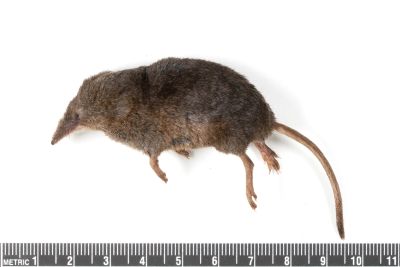
Arctic Shrew (Sorex arcticus) -

Marsh Shrew (Sorex bendirii) -

Masked Shrew (Sorex cinereus) -

Masked Shrew (Sorex cinereus) -

Rock Shrew (Sorex dispar) -

Western Pygmy Shrew (Sorex eximius) -

Maryland Shrew (Sorex fontinalis) -

Smoky Shrew (Sorex fumeus) -

Prairie Shrew (Sorex haydeni) -

Eastern Pygmy Shrew (Sorex hoyi) -

Southeastern Shrew (Sorex longirostris) -

Southeastern Shrew (Sorex longirostris), subspecies eionis (dark chestnut brown) found only in portions of Florida -

Mount Lyell Shrew (Sorex lyelli) -
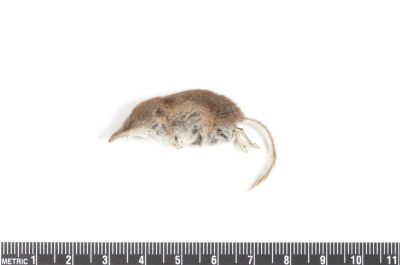
Eurasian Least Shrew (Sorex minutissimus) -

Merriam's Shrew (Sorex merriami) -

Southern Montane Shrew (Sorex monticolus) -

Dwarf Shrew (Sorex nanus) -
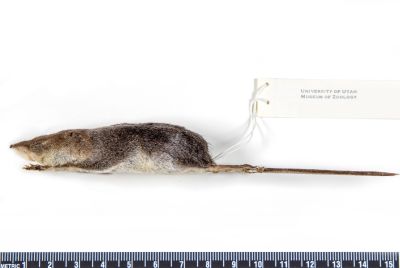
Western Water Shrew (Sorex navigator), note scale bar; this is a large shrew -

Northern Montane Shrew (Sorex obscurus) -

Ornate Shrew (Sorex ornatus) -

Pacific Shrew (Sorex pacificus) -

American Water Shrew (Sorex palustris) -

Preble's Shrew (Sorex preblei). -

Olympic Shrew (Sorex rohweri) -

Fog Shrew (Sorex sonomae) -

Inyo Shrew (Sorex tenellus) -

Trowbridge's Shrew (Sorex trowbridgii) -

Tundra Shrew (Sorex tundrensis) -
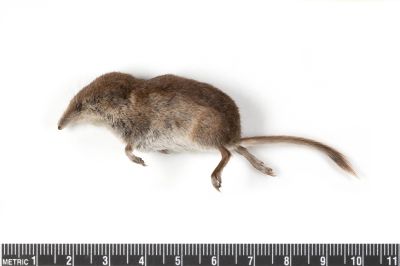
Tundra Shrew (Sorex tundrensis), subadult -

Barren Ground Shrew (Sorex ugyunak) -

Vagrant Shrew (Sorex vagrans), adult in summer coloration -

Vagrant Shrew (Sorex vagrans), adult in winter coloration, almost complete molt
Available taxon pages
The following subgenera are available on WhiskerWiki for this genus:
- Subgenus: Otisorex
- Clade I: No information
- Species group: Sorex cinereus group
- Species group: Sorex monticolus group
- Species group: Sorex palustris group
- Species group: Sorex vagrans group
- Species group: Sorex sonomae group
- Species group: Sorex oreopolus group
- Species group: Sorex hoyi group
- Species group: Sorex dispar group
- Clade I: No information
- Subgenus: Incertae sedis
- Clade I: No information
- Species group: Sorex trowbridgii group
- Species group: Sorex merriami group
- Clade I: No information
- Subgenus: Sorex
- Clade I: No information
Range maps for species in the United States
-

Eastern Water Shrew (Sorex albibarbis). Split from Sorex palustris by Hope et al. (2014). -

Arctic Shrew (Sorex arcticus) -

Arizona Shrew (Sorex arizonae) -

Marsh Shrew (Sorex bendirii) -

Masked Shrew (Sorex cinereus) -

Rock Shrew (Sorex dispar) -

Western Pygmy Shrew (Sorex eximius). Split from Sorex hoyi by Hope et al. (2020). -

Sorex fontinalis. The American Society of Mammalogists Mammal Diversity Database (v2.2, released June 13, 2025) tentatively includes fontinalis in Sorex cinereus. -

Smoky Shrew (Sorex fumeus) -

Prairie Shrew (Sorex haydeni) -

Eastern Pygmy Shrew (Sorex hoyi). Updated range: this species was split by Hope et al. (2020). -

Saint Lawrence Island Shrew (Sorex jacksoni) -

Southeastern Shrew (Sorex longirostris) -

Mount Lyell Shrew (Sorex lyelli) -

Merriam's Shrew (Sorex merriami) -

Eurasian Least Shrew (Sorex minutissimus). Range in North America shown. -

Southern Montane Shrew (Sorex monticolus). Updated range: this species was split into three clades by Demboski & Cook (2001). S. monticolus includes S. neomexicanus. -

Dwarf Shrew (Sorex nanus) -

Western Water Shrew (Sorex navigator). Split from S. palustris by Hope et al. (2014) and includes S. navigator alaskanus. -

Northern Montane Shrew (Sorex obscurus). Split from S. monticola by Demboski & Cook (2001). -

Ornate Shrew (Sorex ornatus) -

Pacific Shrew (Sorex pacificus). Phylogentic analysis published by Demboski & Cook (2001) determined that the "coastal clade" contained S. pacificus, S. bairdi (now S. pacificus bairdi), and portions of what was previously considered S. monticolus. -

American Water Shrew (Sorex palustris). Updated range: this species was split by Hope et al. (2014).) -

Preble's Shrew (Sorex preblei). Dark green range is based on molecular analyses conducted by Hope et al. (2012); green hash shading includes the distribution of this species based on earlier morphological studies. -

Pribilof Island Shrew (Sorex pribilofensis) -

Olympic Shrew (Sorex rohweri) -

Fog Shrew (Sorex sonomae) -

Inyo Shrew (Sorex tenellus) -

Trowbridge's Shrew (Sorex trowbridgii) -

Tundra Shrew (Sorex tundrensis). Range in North America shown. -

Barren Ground Shrew (Sorex ugyunak) -

Vagrant Shrew (Sorex vagrans) -

Sorex sp. RM. This is an undescribed species that was genetically identified by Hope et al. (2012). -

Sorex sp. SW. This is an undescribed species that was genetically identified by Hope et al. (2012).
Skull comparison
Accurate identification of shrews typically requires careful examination of the skull. Below is a table of skull characters that are most useful for identification.
| Species | Number unicuspids | Postmandibular canal | Unicuspid notes | Tines upper incisors | Tine size | Tine position | Shape medial edge incisors | Skull shape | Dental characters | Condylobasal length |
|---|---|---|---|---|---|---|---|---|---|---|
| Sorex albibarbis | 5 | Absent | U3<U4 | Yes | Small | 19.1–21.7 (Beneski & Stinson, 1987); 18.4–19.2 (Álvarez-Castañeda, 2024) | ||||
| Sorex arcticus | 5 | Present | U3≥U4 | Yes | Small | Well below upper limit of pigment on upper incisors | Straight | Skull relatively flat; braincase slightly rounded | Unicuspids robust and appear bulbous in ventral view; tips of upper incisors are more widely separated partly because of tines | 19.1–20.0 (Kirkland & Schmidt, 1996) |
| Sorex arizonae | 5 | Present | U3≥U4 | Yes | Medium | Well below upper limit of pigment on upper incisors | Straight | Braincase is slightly rounded (based on image from Diersing & Hoffmeister, 1977) | Tips of upper incisors are more widely separated partly because of tines (Diersing & Hoffmeister, 1977) | 15.7–16.53 (Diersing & Hoffmeister, 1977); 15.7–16.53 (Álvarez-Castañeda, 2024) |
| Sorex bendirii | 5 | Absent | U3<U4 | Yes | Medium | Slightly curved | Braincase only slightly rounded; rostrum shallow and distinctly downcurved | >19.3 (Pattie, 1973); 20.8–23.8 (Álvarez-Castañeda, 2024) | ||
| Sorex cinereus | 5 | Absent | U3≥U4; U1–U4 are in an almost graduated series | Yes | Medium | Well below upper limit of pigment on upper incisors | Parallel or slightly diverging | Rounded braincase | Tips of upper incisors are more widely separated partly because of tines | 14.3–16.1 (French, 1980); 14.6–16.9 (Álvarez-Castañeda, 2024) |
| Sorex dispar | 5 | Absent | U3≥U4 | Yes | Tiny | At or just below the upper limit of pigment on upper incisors | Diverging | Rostrum shallow; braincase bulbous; posterior border of the infraorbital foramen behind the space between the M1 and M2; mental foramen level with the space between p4 and m1 | 15.8–18.5 (Hall & Kelson, 1959); 16.45–18.7 (Kirkland, 1981); 15.35–18.7 (S. d. gaspensis; Kirkland, 1981); 18.4–19.2 (Álvarez-Castañeda, 2024) | |
| Sorex eximius | 5 | Absent | U3 and U5 are tiny and vestigial | Yes | Large and long | Well below upper limit of pigment on upper incisors | Slightly curved | Skull relatively flat; braincase slightly rounded | U3 and U5 are barely or not at all visible in side view, but may be seen in occlusal view | 13.0–15.8 (Hall & Kelson, 1959); 15.0–16.2 (Álvarez-Castañeda, 2024) |
| Sorex fontinalis | 5 | Absent | U3≥U4 | Yes | Small | Just below the upper limit of pigment on upper incisors | Diverging | Skull relatively flat | 14.63–15.85 (Kirkland & Levengood, 1987); 14.6–15.2 (Junge & Hoffman, 1981) | |
| Sorex fumeus | 5 | Absent; occasionally present on one side | U3>U4 | Yes | Small | Just below the upper limit of pigment on upper incisors | Strongly curved and diverging | Braincase flattened, sometimes extremely; posterior border of the infraorbital foramen ahead of the space between the M1 and M2; mental foramen approximately level with the protoconid of m1 | Width of unicuspids exceeds length | 17.4–18.5 (Owen, 1984) |
| Sorex haydeni | 5 | Absent | U3≥U4 | Yes | NA | 14.2–15.1 (n=10; van Zyll de Jong, 1976); 15.0–16.1 (French, 1980); 14.1–15.9 (Álvarez-Castañeda, 2024) | ||||
| Sorex hoyi | 5 | Absent | U3 and U5 are tiny and vestigial | Yes | Large and long | Well below upper limit of pigment on upper incisors | Slightly curved | Braincase is rounded | U3 and U5 are barely or not at all visible in side view, but may be seen in occlusal view | 13.0–15.8 (Hall & Kelson, 1959); 14.3–15.0 (Álvarez-Castañeda, 2024) |
| Sorex jacksoni | 5 | Absent | U3≥U4 | Yes | NA | 15.6–16.3 (Hall & Kelson, 1959) | ||||
| Sorex longirostris | 5 | Absent | U3<U4; U3 and U4 sometimes subequal | Yes | Small | At or just below pigment line | Strongly diverging | Braincase is rounded | 13.8–15.6, except S. l. fisheri 15.4–16.4 (French, 1980) | |
| Sorex lyelli | 5 | Absent | U3≥U4 | Yes | NA | 15.2–15.4 (Hall & Kelson, 1959) | ||||
| Sorex merriami | 5 | Present | U3>U4; U2 is largest | No | NA | Converging | Braincase relatively flat | Tips of upper incisors are close together since teeth converge distally | 15.7–17.1 (Armstrong & Jones, 1971), 16–18 (Armstrong, 2010); 15.1–16.9 (Álvarez-Castañeda, 2024) | |
| Sorex minutissimus | 5 | Present | U3>U4 | NA | 12.0–14.3 (Yudin, 1971) | |||||
| Sorex monticolus | 5 | Absent | U3<U4 | Yes | Small-medium | Below upper limit of pigment on upper incisors | Diverging | Braincase is rounded | 16.1–17.7 (Hennings & Hoffman, 1977); 16.1–19.2 (Junge & Hoffman, 1981) ; 16.2–16.7 (Álvarez-Castañeda, 2024) | |
| Sorex nanus | 5 | Absent | U3<U4 | Yes | Medium | Below upper limit of pigment on upper incisors | Diverging | Braincase narrow and appears flattened when viewed from the side | A diagnostic dental measurement is the distance from the posterior border of the alveolus of the fifth unicuspid to the anterior margin of the alveolus of the incisor ranges between 1.8 and 2.4 mm. | 13.8–14.8 (Hoffman & Owen, 1980) |
| Sorex navigator | 5 | Absent | U3<U4; U2>U1 | Yes; although lacking in some individuals | Tiny | Well below upper limit of pigment on upper incisors | Diverging | 19.1–21.7 (Beneski & Stinson, 1987); up to 22 (Armstrong, 2010) | ||
| Sorex obscurus | 5 | Absent | U3<U4 | Yes | Small-medium | Below upper limit of pigment on upper incisors | Diverging | Skull somewhat slightly flattened | 16.1–17.7 (Hennings & Hoffman, 1977); 16.1–19.2 (Junge & Hoffman, 1981) | |
| Sorex ornatus | 5 | Absent | U3<U4 | Yes | Medium | Below upper limit of pigment on upper incisors | Diverging | Relatively flat and broad and depressed interorbitally | Upper toothrow not crowded, with distinct triangular space between postero-medial edge of the fifth unicuspid and antero-medial edge of premolar; tips of upper incisors are more widely separated partl… | 14.7–17.1 (Owen & Hoffman, 1983); 15.6–17.1 (Álvarez-Castañeda, 2024) |
| Sorex pacificus | 5 | Absent | U3<U4 | No; but may have a median ridge | NA | Slightly diverging (based on illustration in Carraway, 1985) | In ventral view, the unicuspids are wider than long | 19.0–22.8 (Junge & Hoffman, 1981); 21.4–23.0 (Álvarez-Castañeda, 2024) | ||
| Sorex palustris | 5 | Absent | U3<U4 | Yes | Small | Below upper limit of pigment on upper incisors | Diverging | Rostrum straight or downcurved only slightly; braincase broad and flattened | 19.1–21.7 (Beneski & Stinson, 1987) | |
| Sorex preblei | 5 | Absent | U3>U4; U1–U4 are in an almost graduated series | Yes | Long~~acutely pointed | Below upper limit of pigment on upper incisors | Diverging | Skull relatively flat | 13.8–14.6 (Hoffman et al., 1969); less than or equal to 14.8 (Carraway, 1998); 13.8–15.1 (Álvarez-Castañeda, 2024) | |
| Sorex pribilofensis | 5 | Absent | U3>U4 | NA | 15.4–16.0 (Hall & Kelson, 1959) | |||||
| Sorex rohweri | 5 | Present | U3<U4 | Yes | Tiny | At or above the upper pigment edge | Diverging; slightly curved | Tines are are weak and often difficult to discern; pigmentation is pale or lacking (Woodman & Fisher, 2016) | 14.7–16.6 (Woodman & Fisher 2016) | |
| Sorex sonomae | 5 | Absent | U3<U4; U5 usually rectangular | No | NA | Parallel | Braincase is rounded | Unicuspids appear somewhat bulbous; fifth unicuspid is usually rectangular and is separated from the fourth premolar by a gap (Verts & Carrawy, 1998) | S. s. sonomae: 19.34–23.22 (Carraway, 1989); S. s. tenelliodus: 16.5–20.21 (Carraway, 1989) | |
| Sorex tenellus | 5 | Absent | U3<U4 | Yes | Tiny | Below upper limit of pigment on upper incisors | Diverging | Braincase is slightly rounded (based on images) | 14.5–15.3 (Hoffman & Owen, 1980) | |
| Sorex trowbridgii | 5 | Present | U3<U4 | Yes | Small-medium | Below upper limit of pigment on upper incisors | Diverging and curved | Braincase is rounded | 16.8–18.8 (see George, 1989 for citations); 16.8–17.5 (Álvarez-Castañeda, 2024) | |
| Sorex tundrensis | 5 | Present | U3>U4 | Yes | Medium | Well below upper limit of pigment on upper incisors | Parallel or slightly diverging | Braincase is slightly rounded | 17.0–18.5 (Junge & Hoffman, 1981) | |
| Sorex ugyunak | 5 | Absent | U3≥U4 | Yes | Medium | Below upper limit of pigment on upper incisors | Slightly diverging | Braincase is rounded | Tips of upper incisors are more widely separated partly because of tines | 13.7–15.2 (Northwest Territories; van Zyll de Jong, 1976); 14.78 (n=26; van Zyll de Jong, 1976); 15.1–16.0 (northern Alaska; Bee & Hall, 1956; use with caution) |
| Sorex vagrans | 5 | Absent; occasionally present on one side | U3<U4 | Yes | Small | At or above the upper edge of pigment; commonly there is a white or pale-colored area between the tine and body of the tooth | Diverging | Braincase is rounded | 15.5–17.5 (Gillihan & Foresman, 2004) |