Arvicolinae
| Subfamily Arvicolinae | |
|---|---|
| Taxonomic classification | |
| Order: | Rodentia |
| Suborder: | Supramyomorpha |
| Infraorder: | Myomorphi |
| Superfamily: | Muroidea |
| Family: | Cricetidae |
The subfamily Arvicolinae contains lemmings, voles, and muskrats. From Naughton (2012): "Members of this subfamily are characterized by their teeth. The crowns of the molars are composed of prisms of alternating triangles. They feed on plant material and have flat-topped molars to provide grinding surfaces and many have rootless molars that are ever-growing to compensate for the relentless wear caused by their diet."
Lemmings in the United States
Collared Lemmings (genus: Dicrostonyx)
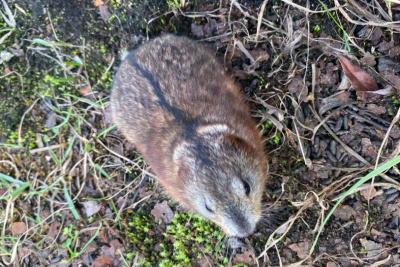
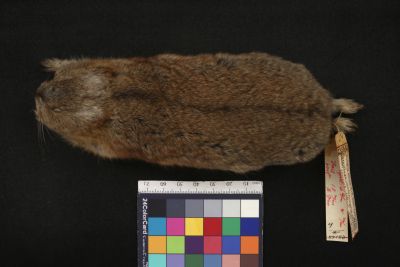
The common name refers to the pale indistinct band of fur that runs over the back of the neck just behind the ears in most adults. More obvious though, in most adults, is a thin dark line that runs along the middle of the back from the nose to the tail. This line is clearly visible in juveniles but may fade in some adults. These are the only North American rodents that turn completely white in winter.


True Lemmings (genus: Lemmus)
The Beringian Brown Lemming (Lemmus nigripes) was formerly considered a sister species of Lemmus trimucronatus restricted to St. George Island, Pribilof Islands (Davis, 1944). Genetic studies by Spitsyn et al. (2021) found the mean cytb p-distance between the eastern clade of Lemmus trimucronatus and the western clade, which includes northeastern Asia and northwestern North America, is as high as 7.2%, and they thus they were fully supported as separate species-level units. The western clade of Lemmus trimucronatus is now referred to as Lemmus nigripes.
-

Beringian Brown Lemming (Lemmus nigripes) -

Nearctic Brown Lemming (Lemmus trimucronatus) observed by Julia Carr in British Columbia, Canada.
Bog Lemmings (genera: Mictomys and Synaptomys)
Until recently, the Northern Bog Lemming (Mictomys borealis) was considered a species in the genus Synaptomys. Hope et al. (2023) provide multiple lines of evidence that supports the recognition of Mictomys borealis, distinct at the generic level from Synaptomys.
-
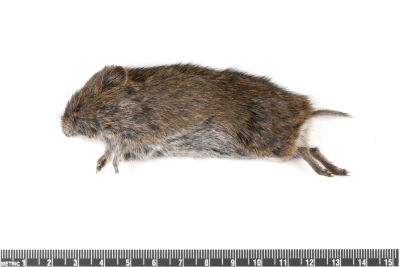
Northern Bog Lemming (Mictomys borealis) -

Southern Bog Lemming (Synaptomys cooperi)
Muskrats in the United States
Muskrats (genera: Neofiber and Ondatra)
Species not pictured: Round-tailed Muskrat (Neofiber alleni)
-

Common Muskrat (Ondatra zibethicus) observed by maticus in Davis County, Utah.
Voles in the United States
Voles are a group of small rodents that are difficult to differentiate and successful identification often requires examination of the teeth. Below, a photograph of a vouchered (museum) specimen is provided because the identification has been confirmed by an expert. Depending on your location, it may not be possible to make a species-level identification based on a photograph alone. Tree Voles (genus: Arborimus) and Red-backed Voles (genus: Clethrionomys) are a bit easier to differentiate from other species due to their coloration.
Root Vole (genus: Alexandromys)
-
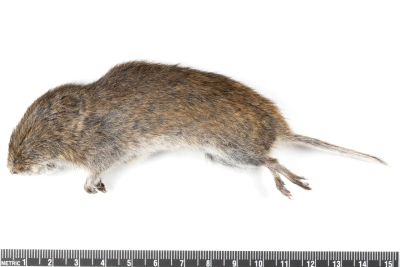
Root Vole (Alexandromys oeconomus). Body fur is golden brown, which is darker to rusty brown on the back and more golden or grayish on the sides and rump. Belly fur is grayish white often with a buffy wash.
Tree Voles (genus: Arborimus)
-
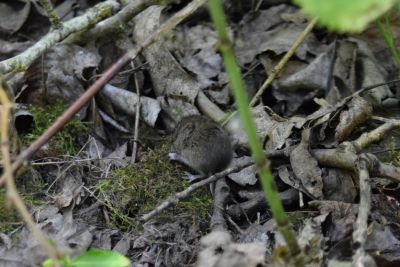
White-footed Vole (Arborimus albipes) observed by Lisa Feldkamp in Portland, Oregon. A small, dark brown vole found in the redwood forests of California and Oregon. -
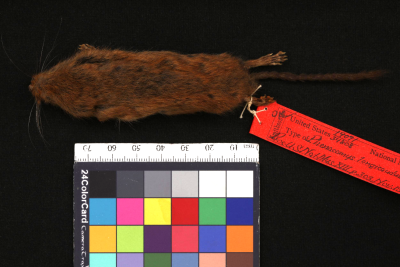
Red Tree Vole (Arborimus longicaudus). A small, bright chestnut red or brick red vole found in the old growth forests of Oregon and northern California. -

Sonoma Tree Vole (Arborimus pomo) observed by fishwrangler in Humboldt County, California. A small, reddish brown vole found in the old growth forests of northern California.
Red-backed Voles (genus: Clethrionomys, formerly Myodes)
As the common name implies, members of the genus Clethrionomys typically have a broad band of reddish or chestnut-colored fur along their back from forehead to tail. Although, the intensity of this band is variable and can be faint. Species not pictured: Western Red-backed Vole (Clethrionomys californicus).
-

Southern Red-backed Vole (Clethrionomys gapperi). This species has a broad band of chestnut-colored fur along their back from forehead to tail. In some populations, melanistic individuals may occur that have sooty black dorsal stripes. -

Northern Red-backed Vole (Clethrionomys rutilus). This species has a broad rufous band of fur along their back from forehead to tail. In some populations, melanistic individuals may occur that have sooty black dorsal stripes.
Sagebrush Vole (genus: Lemmiscus)
Juveniles and subadults of the Western Heather Vole (Phenacomys intermedius) may be confused with adults of Lemmiscus curtatus. Common habitats of Phenacomys intermedius include open coniferous forests with a shrubby understory, riparian areas with thickets, forest edges, and moist alpine and subalpine meadows. Common habitats of Lemmiscus curtatus include sagebrush and rabbitbrush mixed with bunchgrass.
-

Sagebrush Vole (Lemmiscus curtatus). A small vole. The dorsal pelage is buff-gray to gray with the sides paler in color. The tail is distinctly short.
Meadow Voles (genus: Microtus)
Species not pictured: Gray-tailed Vole (Microtus canicaudus), Rock Vole (Microtus chrotorrhinus), Florida Salt Marsh Vole (Microtus dukecampbelli), Mogollon Vole (Microtus mogollonensis), Townsend's Vole (Microtus townsendii).
-

Singing Vole (Microtus abbreviatus). Pelage color is variable throughout the distribution, from pale buffy gray to pale ochraceous to pale tawny. -

California Vole (Microtus californicus). Dorsal pelage is cinnamon-brown to tawny olive with dark brown to black hairs. -

Western Meadow Vole (Microtus drummondii). Dorsal color is usually dark gray-brown to chestnut. -

Long-tailed Vole (Microtus longicaudus). Pelage color ranges from dull grayish through brownish gray to dark sepia brown. The tail is long. -

Montane Vole (Microtus montanus). Pelage is brownish, often with a buffy or gray wash. Individuals in the southwestern part of the range are generally darker brown. -

Prairie Vole (Microtus ochrogaster). Dorsal coloration ranges from grayish-brown to reddish. -

Creeping Vole (Microtus oregoni). A small vole with tiny eyes. The dorsum is sooty gray to dark brown or black. -

Eastern Meadow Vole (Microtus pennsylvanicus). The dorsum varies from yellowish-chestnut to dark chestnut-brown to blackish or grayish with slightly paler sides. -

Woodland Vole (Microtus pinetorum). Fur is dark reddish-brown dorsally, paler on the sides, and gray washed with brown ventrally. -

North American Water Vole (Microtus richardsoni), note the scale bar; this is the largest vole in North America. The upperparts are grayish sepia to dark sepia or dark reddish brown, often darkened with black-tipped hairs. The fur on the underparts is plumbeous. -

Taiga Vole (Microtus xanthognathus), subadult. This is one of the largest voles in the genus. Upper parts are dark sepia to bister and heavily lined with coarse black hairs on back. Adults have a conspicuous rusty-yellowish color about the whisker area.
Heather Voles (genus: Phenacomys)
Adults of Phenacomys intermedius may be confused with the Montane Vole (Microtus montanus). Juveniles and subadults of Phenacomys intermedius may be confused with adults of the Sagebrush Vole (Lemmiscus curtatus). Common habitats of Phenacomys intermedius include open coniferous forests with a shrubby understory, riparian areas with thickets, forest edges, and moist alpine and subalpine meadows. Common habitats of Lemmiscus curtatus include sagebrush and rabbitbrush mixed with bunchgrass. Species not pictured: Eastern Heather Vole (Phenacomys ungava). In the United States, Phenacomys ungava is found only in the very northweastern part of Minnesota.
-

Western Heather Vole (Phenacomys intermedius). A rather small vole. Dorsal color ranges from brown to grayish. The venter is silvery gray. Usually, there are stiff, orangish brown hairs in the ears. -

Western Heather Vole (Phenacomys intermedius), juvenile.
Range maps for species in the USA
Lemmings
-
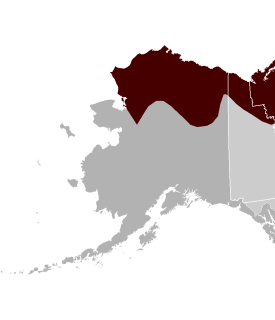
Nearctic Collared Lemming (Dicrostonyx groenlandicus) -

Nelson's Collared Lemming (Dicrostonyx nelsoni) -

Unalaska Collared Lemming (Dicrostonyx unalascensis) -

Beringian Brown Lemming (Lemmus nigripes). Range in North America based on Spitsyn et al. (2021). -

Nearctic Brown Lemming (Lemmus trimucronatus). Range based on Spitsyn et al. (2021) -
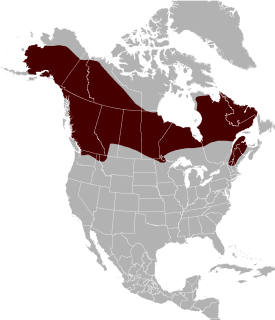
Northern Bog Lemming (Mictomys borealis). Moved from Synaptomys to Mictomys by Hope et al. (2023). -

Southern Bog Lemming (Synaptomys cooperi)
Muskrats
-

Round-tailed Muskrat (Neofiber alleni) -

Common Muskrat (Ondatra zibethicus)
Voles
-

Root Vole (Alexandromys oeconomus). Formerly Microtus oeconomus. Range in North America only. -
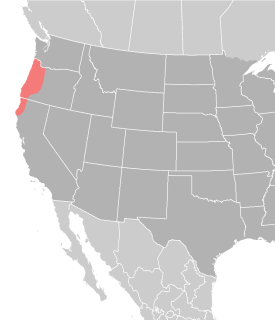
White-footed Vole (Arborimus albipes) -

Red Tree Vole (Arborimus longicaudus) -

Sonoma Tree Vole (Arborimus pomo) -

Western Red-backed Vole (Clethrionomys californicus) -

Southern Red-backed Vole (Clethrionomys gapperi) -
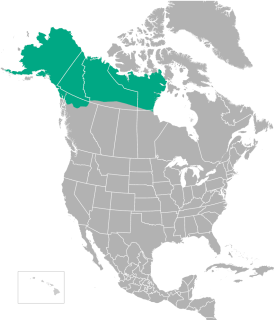
Northern Red-backed Vole (Clethrionomys rutilus) (range in North America only) -
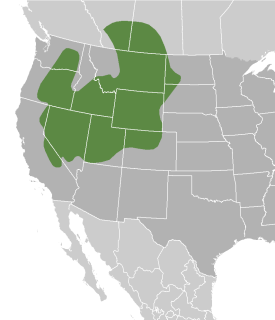
Sagebrush Vole (Lemmiscus curtatus) -

Singing Vole (Microtus abbreviatus). Genetic studies by Weksler et al. in 2010 indicate that M. miurus should be included in M. abbreviatus. -

California Vole (Microtus californicus) -

Gray-tailed Vole (Microtus canicaudus) -

Rock Vole (Microtus chrotorrhinus) -
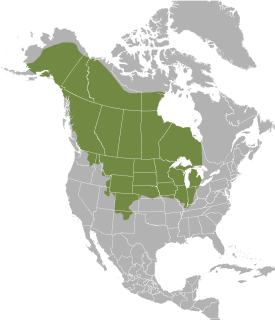
Western Meadow Vole (Microtus drummondii). Split from M. pennsylvanicus by Jackson and Cook (2020). -
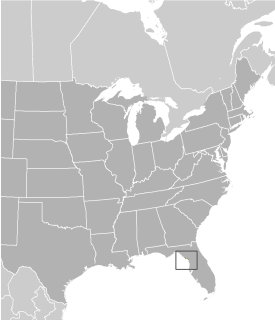
Florida Salt Marsh Vole (Microtus dukecampbelli) -

Long-tailed Vole (Microtus longicaudus) -

Mogollon Vole (Microtus mogollonensis). Split from M. mexicanus by Crawford et al. (2011). -
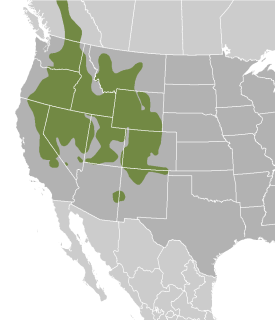
Montane Vole (Microtus montanus) -

Prairie Vole (Microtus ochrogaster) -

Creeping Vole (Microtus oregoni) -
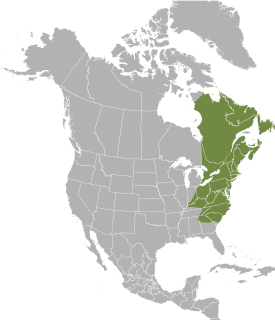
Eastern Meadow Vole (Microtus pennsylvanicus). Updated range: split by Jackson and Cook (2020). -

Woodland Vole (Microtus pinetorum) -
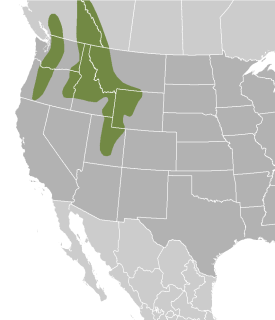
North American Water Vole (Microtus richardsoni) -

Townsend's Vole (Microtus townsendii) -

Taiga Vole (Microtus xanthognathus) -

Western Heather Vole (Phenacomys intermedius) -

Eastern Heather Vole (Phenacomys ungava)
Available taxon pages
The following tribes are available on WhiskerWiki for this subfamily:
- Tribe: Arvicolini
- Genus: Microtus
- Subgenus: Mynomes
- Microtus richardsoni
- Microtus dukecampbelli
- Microtus longicaudus
- Microtus mogollonensis
- Microtus montanus
- Microtus ochrogaster
- Microtus oregoni
- Microtus pennsylvanicus
- Microtus pinetorum
- Microtus drummondii
- Microtus townsendii
- Microtus xanthognathus
- Microtus abbreviatus
- Microtus californicus
- Microtus canicaudus
- Microtus chrotorrhinus
- Subgenus: Mynomes
- Genus: Alexandromys
- Subgenus: Oecomicrotus
- Genus: Lemmiscus
- Subgenus: No information
- Genus: Microtus
- Tribe: Lemmini
- Genus: Mictomys
- Subgenus: Mictomys
- Genus: Synaptomys
- Subgenus: Synaptomys
- Genus: Lemmus
- Subgenus: No information
- Genus: Mictomys
- Tribe: Ondatrini
- Tribe: Pliophenacomyini
- Genus: Phenacomys
- Subgenus: No information
- Genus: Arborimus
- Subgenus: No information
- Genus: Phenacomys
- Tribe: Dicrostonychini
- Tribe: Clethrionomyini
- Genus: Clethrionomys
- Subgenus: No information
- Genus: Clethrionomys
References
Naughton D. 2012. The natural history of Canadian mammals. Toronto (ON, CA): University of Toronto Press.