Urocitellus
| Genus Urocitellus | |
|---|---|
| Range | |
 | |
| Taxonomic classification | |
| Order: | Rodentia |
| Suborder: | Sciuromorpha |
| Family: | Sciuridae |
| Subfamily: | Xerinae |
| Tribe: | Marmotini |
Urocitellus is a genus of ground squirrels in the family Sciuridae. Urocitellus was elevated from subgeneric to generic rank by Helgen et al. (2009). There are 13 recognized species in the genus and 12 of those species occur in the United States. The Arctic Ground Squirrel (Urocitellus parryii) occurs in both North America and Asia. Urocitellus undulatus is the only species in the genus that does not occur in North America; it occurs in parts of Siberia and east Asia.
From McLean et al. (2025): "Traditionally, the genus has been conceptualized as containing 2 species groups—the “big-eared” and “small-eared” groups—which appear reciprocally monophyletic (McLean et al. 2016, 2019, 2022) and differ from one another in aspects of body size, habitat preference, and ecology (Howell 1938; Davis 1939; Durrant and Hansen 1954; Rickart 1987)."
Species in the United States
-

Uinta Ground Squirrel (Urocitellus armatus) photographed by pirish761 in Yellowstone National Park, Wyoming. This is a big-eared species recognized by a crown sprinkled with gray and by cinnamon coloring on its head, front of face, and ears. Forelegs are cinnamon buff with pinkish shading towards forefeet. -

Belding's Ground Squirrel (Urocitellus beldingi) photographed by Roger Woodruff in Tuolumne County, California. This is a big-eared species with a mid-dorsal area often is darker reddish-brown than the sides, although the conspicuousness of this trait varies geographically. -

Idaho Ground Squirrel (Urocitellus brunneus) photographed by Yinan Li in Payette County, Idaho. This is a small, brownish, dorsally-spotted ground squirrel. -
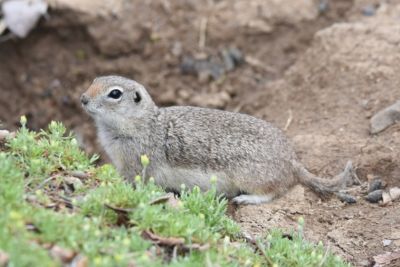
Merriam's Ground Squirrel (Urocitellus canus) photographed by Christopher Lindsey in Baker County, Oregon. This is a small-eared species. It is a gray ground squirrel with dorsal pelage that lacks spots or flecks. The sides of the head and the hind legs are tinted with pinkish to reddish buff. -

Columbian Ground Squirrel (Urocitellus columbianus) photographed by Andrey Atuchin in Kananaskis, Alberta, Canada. This is a big-eared species. It is one of the largest and most richly colored species in the genus Urocitellus. -

Wyoming Ground Squirrel (Urocitellus elegans) photographed by wyattherp in Grand County, Colorado. This is a big-eared species with upperparts that are light drab and flecked or dappled with light pinkish buff, clay color, pinkish cinnamon, or blackish hairs. -
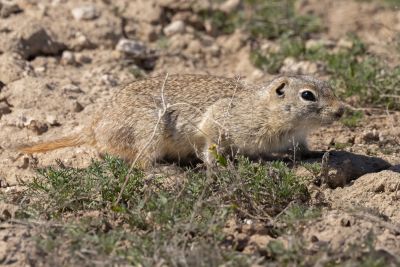
Snake River Plains Ground Squirrel (Urocitellus idahoensis) photographed by myworldofbirdphotography in Ada County, Idaho. This is a small-eared species. Dorsal color is variegated yellowish-brown with pale yellow dappling that is most distinct on rump but extending to shoulders in some individuals. Top of nose, outer surfaces of the lower hind legs, and underside of the tail are reddish-brown. -

Piute Ground Squirrel (Urocitellus mollis) photographed by Caleb Stroh in Box Elder County, Utah. This is a small-eared species. The upper parts are finely variegated silvery-gray, light yellowish-brown, and black; these colors are uniformly mixed throughout, without any indication of spots. -

Arctic Ground Squirrel (Urocitellus parryii) photographed by Ryan Sealy in the Yukon Territory, Canada. This is a big-eared species that is intensely and variably colored. The dorsal pelage is noticeably flecked with white spots. This is the largest species in the genus Urocitellus. -

Richardson's Ground Squirrel (Urocitellus richardsonii) photographed by Pia Odgaard in Alberta, Canada. This is a big-eared species with upperparts that are pinkish buff or cinnamon buff shaded with fuscous and the posterior part of the back showing a dappled effect. The sides of the head and neck and the fronts of the forelegs are cinnamon buff or clay colored. -

Townsend's Ground Squirrel (Urocitellus townsendii) photographed by Dasha Gudalewicz in Washington state. This is a small-eared species with dorsal coloration that lacks spots. -

Washington Ground Squirrel (Urocitellus washingtoni) photographed by TonyP PNW in Washington state. This is a small-eared species. The dorsum is flecked with grayish-white spots.
Identification notes
Comparison with prairie dogs (genus: Cynomys) and marmots (genus: Marmota)
Urocitellus ground squirrels are sometimes confused with prairie dogs (genus: Cynomys) or marmots (genus: Marmota). Urocitellus ground squirrels are distinguished from prairie dogs and marmots by their smaller body size, smaller skull, and pelage coloration. Prairie dogs generally have more uniform, buff or tan coloration without much patterning. The coat coloration of marmots is variable, but they are much larger ground squirrels with thick coats and bushy tails.
Comparison of species within the genus Urocitellus
From McLean et al. (2025): "Traditionally, the genus has been conceptualized as containing 2 species groups—the “big-eared” and “small-eared” groups—which appear reciprocally monophyletic (McLean et al. 2016, 2019, 2022) and differ from one another in aspects of body size, habitat preference, and ecology (Howell 1938; Davis 1939; Durrant and Hansen 1954; Rickart 1987)."
McLean provided the following general comment (via personal communication September 16, 2025) on "big-eared" vs "small-eared" species in the genus Urocitellus: "This is the major split in the genus Urocitellus with some arguing that the differences are quite trenchant. The body size differences between the two groups are substantial and, in many cases, represent the most immediate distinguishing character for inter-group comparisons." Based on this recommendation, a comparison table is provided below.
| Species | Subgroup | Total length | Greatest length of skull | Measurement reference |
|---|---|---|---|---|
| Urocitellus armatus | big-eared | 280–303 mm | 45.6–48.5 mm | Eshelman and Sonnemann (2000) |
| Urocitellus beldingi | big-eared | 230–300 mm | 41.3–46.3 mm | Jenkins and Eshelman (1984) |
| Urocitellus brunneus | small-eared* | 209–258 mm | 36.1–42.5 mm | Yensen and Sherman (1997) |
| Urocitellus canus | small-eared | typically <250 mm | 34.6–38.7 mm (condylobasal length) | Cole and Wilson (2009) |
| Urocitellus columbianus | big-eared | 325–410 mm | 51.7 mm (ssp. ruficaudus) | Elliot and Flinders (1991) |
| Urocitellus elegans | big-eared | 253–307 mm | 43.0–46.8 mm | Zegers (1984) |
| Urocitellus idahoensis | small-eared | 188 mm (holotype for subspecies artemesiae); 263 mm (holotype for subspecies idahoensis) | 32.7–36.2 mm (condylobasal length for subspecies artemesiae); 36.2–39.0 (condylobasal length subspecies idahoensis) | McLean (2025) |
| Urocitellus mollis | small-eared | 188 mm (holotype) | 33.4–38.6 mm (condylobasal length) | McLean (2025) |
| Urocitellus parryii | big-eared | 300–495 mm | 53.2–65.8 mm | McLean (2018) |
| Urocitellus richardsonii | big-eared | 277–330 mm | 45.1–48.4 mm | Michener and Koeppl (1985); Hazard (1982) |
| Urocitellus townsendii | small-eared | Museum help needed | Museum help needed | |
| Urocitellus washingtoni | small-eared | 185–245 mm | 35.0–41.8 mm | Rickart and Yensen (1991) |
Range maps
-

Uinta Ground Squirrel (Urocitellus armatus) -

Belding's Ground Squirrel (Urocitellus beldingi) -

Idaho Ground Squirrel (Urocitellus brunneus) -
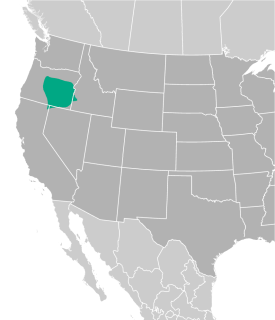
Merriam's Ground Squirrel (Urocitellus canus) -

Columbian Ground Squirrel (Urocitellus columbianus) -

Wyoming Ground Squirrel (Urocitellus elegans) -

Snake River Plains Ground Squirrel (Urocitellus idahoensis) -
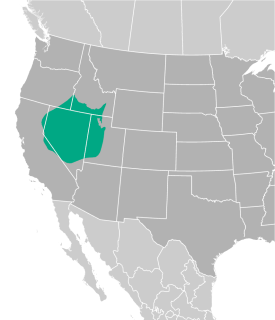
Piute Ground Squirrel (Urocitellus mollis) -

Arctic Ground Squirrel (Urocitellus parryii) -

Richardson's Ground Squirrel (Urocitellus richardsonii) -
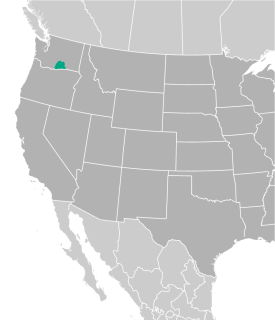
Townsend's Ground Squirrel (Urocitellus townsendii) -

Washington Ground Squirrel (Urocitellus washingtoni)
Available taxon pages
The following subgenera are available on WhiskerWiki for this genus:
- Subgenus: No information
References
Davis WB. 1939. The Recent Mammals of Idaho. Caldwell (ID, USA): The Caxton Printers, Ltd.
Durrant SD, Hansen RM. 1954. Distribution patterns and phylogeny of some western ground squirrels. Systematic Zoology 3(2):82–85. https://doi.org/10.2307/2411841
Helgen KM, Cole FR, Helgen LE, Wilson DE. 2009. Generic revision in the Holarctic ground squirrel genus Spermophilus. Journal of Mammalogy 90(2):270-305.
Howell AH. 1938. Revision of the North American ground squirrels, with a classification of the North American Sciuridae. North American Fauna 56:1–256. https://doi.org/10.3996/nafa.56.0001
McLean BS, Bell KC, Allen JM, Helgen KM, Cook JA. 2019. Impacts of inference method and data set filtering on phylogenomic resolution in a rapid radiation of ground squirrels (Xerinae: Marmotini). Systematic Biology 68(2):298–316. https://doi.org/10.1093/sysbio/syy064
McLean BS, Bell KC, Cook JA. 2022. SNP-based phylogenomic inference in Holarctic ground squirrels (Urocitellus). Molecular Phylogenetics and Evolution 169 (April 2022):107396. https://doi.org/10.1016/j.ympev.2022.107396
McLean BS, Jackson DJ, Cook JA. 2016. Rapid divergence and gene flow at high latitudes shape the history of Holarctic ground squirrels (Urocitellus). Molecular Phylogenetics and Evolution 102(September 2016):174–188. https://doi.org/10.1016/j.ympev.2016.05.040
McLean BS, Rickart EA, Cook JA, Guralnick RP, Burgin CJ, Lohr K. 2025. Integrative species delimitation reveals an Idaho-endemic ground squirrel, Urocitellus idahoensis (Merriam 1913). Journal of Mammalogy (106) 405–429. https://doi.org/10.1093/jmammal/gyae135
Rickart EA. 1989. Variation in renal structure and urine concentrating capacity among ground squirrels of the Spermophilus townsendii complex (Rodentia: Sciuridae). Comparative Biochemistry and Physiology 92(4):531–534. https://doi.org/10.1016/0300-9629(89)90360-5